
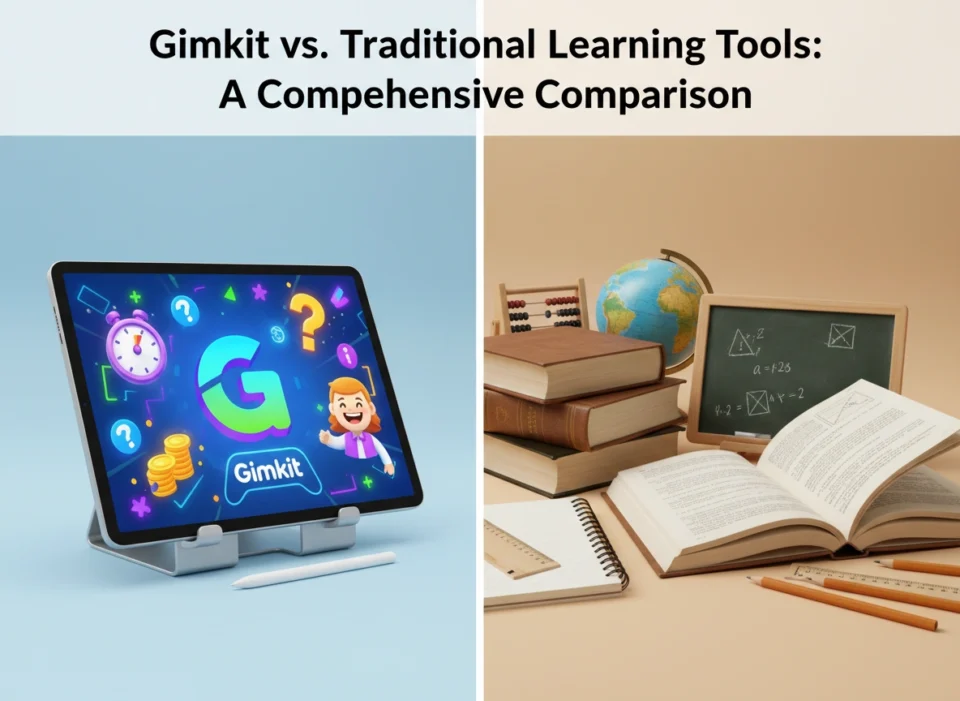
The landscape of education is in a constant state of evolution. For generations, traditional learning tools like textbooks, worksheets, and flashcards have been the bedrock of instruction. These methods have proven their worth over time, providing a structured and reliable framework for knowledge transfer. However, the digital age has ushered in a new wave of educational technology designed to capture the attention of modern learners. Among these is Gimkit, a game-show-style learning platform that has rapidly gained popularity in classrooms worldwide. This article offers a detailed comparison between Gimkit and traditional learning tools, exploring their features, effectiveness, and ideal applications in the educational environment.
What is Gimkit? Understanding the Game-Changer
Gimkit is not just another digital quiz tool; it’s a dynamic learning environment built on the principles of gamification. Created by a high school student, its design is inherently attuned to what engages young minds. At its core, Gimkit allows educators to create “Kits”—sets of questions on any given topic. Students then compete against each other, either individually or in teams, to answer these questions correctly.
What sets Gimkit apart are its unique gameplay mechanics. Answering questions correctly earns students in-game currency, which they can then “invest” in power-ups and upgrades. These upgrades might increase the amount of money earned per correct answer, offer strategic advantages, or even allow them to hinder the progress of their opponents. This economic layer adds a compelling element of strategy that goes beyond simple right-or-wrong quizzing.
Furthermore, Gimkit offers a variety of game modes, each with a different objective. From a race to a target cash amount in “Classic” mode to a cooperative challenge where students work together to defeat a common foe in “The Floor is Lava,” the platform keeps the experience fresh and exciting. This combination of competition, strategy, and collaboration transforms a standard review session into an immersive and memorable event.
The Enduring Role of Traditional Learning Tools
Before diving deeper into a direct comparison, it is crucial to acknowledge the foundational role of traditional learning tools. These are the materials that have supported education for centuries. They include:
- Textbooks: Comprehensive sources of curated, in-depth information that provide a structured curriculum.
- Worksheets and Workbooks: Tools for reinforcing concepts through repetitive practice and application. They offer a tangible way for students to work through problems and for teachers to assess understanding.
- Flashcards: A classic method for memorization, particularly effective for vocabulary, mathematical formulas, and historical dates.
- Lectures and Chalkboards/Whiteboards: The traditional method of direct instruction, allowing for real-time explanation and visual demonstration of concepts.
These tools are characterized by their structure, tangibility, and direct approach to learning. They provide a predictable and controlled environment where content is presented systematically. For many educators and students, this familiarity is a significant strength, providing a clear path for teaching and learning.
Key Differences: Engagement, Adaptability, and Effectiveness
When placing Gimkit and traditional tools side-by-side, several key distinctions emerge across critical aspects of the learning process.
Engagement and Motivation
This is perhaps the most significant area of difference. Traditional tools often rely on a student’s intrinsic motivation or a desire for good grades to drive engagement. A worksheet, for instance, is rarely an exciting prospect on its own. Its value is tied to the completion of a task and the potential for a positive assessment.
Gimkit, conversely, taps into extrinsic and intrinsic motivators simultaneously. The competitive gameplay, the immediate feedback of earning in-game cash, and the strategic use of power-ups create a highly stimulating environment. Students are not just answering questions; they are playing a game. This gamified approach can captivate even the most reluctant learners, transforming review from a chore into a highly anticipated activity. The fast-paced nature of the game encourages quick thinking and active participation from every student in the room.
Adaptability and Personalization
Traditional tools often follow a one-size-fits-all model. A textbook presents information in a linear fashion, and a worksheet provides the same set of problems to every student. While a teacher can manually differentiate assignments, the tools themselves are not inherently adaptive.
Gimkit offers greater potential for real-time adaptation. The platform’s “KitCollab” feature allows students to contribute questions to a Kit, fostering a sense of ownership and co-creation. During gameplay, students naturally work at their own pace. A student who struggles may answer fewer questions but can still participate and contribute, while advanced students can challenge themselves to earn more money and climb the leaderboard. After the game, educators receive detailed reports that break down student performance question by question. This data allows for targeted intervention, helping teachers identify specific areas where individual students or the entire class may be struggling.
Effectiveness and Knowledge Retention
The effectiveness of any tool is measured by its ability to foster long-term knowledge retention. Traditional tools, particularly those focused on practice and repetition like worksheets and flashcards, are designed to embed information into long-term memory. The act of writing down an answer or repeatedly reviewing a concept helps solidify neural pathways.
Gimkit’s effectiveness lies in its ability to make learning memorable through experience. The emotional highs of taking the lead, the strategic decisions about spending in-game currency, and the collaborative effort in team modes all create strong cognitive anchors. This is a form of “affective learning,” where emotion is tied to information, making it easier to recall later. A student is more likely to remember the correct answer to a question that cost them the lead in a close game than one they simply circled on a worksheet. However, Gimkit’s focus is primarily on recall and review rather than the deep, conceptual understanding that might be developed through reading a detailed textbook chapter or working through a multi-step problem on paper.
Pros and Cons of Each Approach
Gimkit
- Pros:
-
- High Engagement: The gamified format is exceptionally motivating for students.
- Immediate Feedback: Students know instantly if their answer is correct, allowing for self-correction.
- Data-Rich Reporting: Provides teachers with valuable insights into student performance.
- Promotes Collaboration and Strategy: Game modes encourage teamwork and critical thinking beyond simple memorization.
- Cons:
-
- Potential for Overstimulation: The fast-paced, competitive environment can be stressful for some students.
- Focus on Speed: The emphasis on answering quickly might discourage students from deep, reflective thinking.
- Technology Dependent: Requires devices and a stable internet connection, which may not be available in all learning environments.
- Limited to Review: Best suited for reinforcing existing knowledge rather than introducing complex new topics.
Traditional Learning Tools
- Pros:
-
- Promote Deep Learning: Textbooks and focused worksheets encourage in-depth understanding and critical analysis.
- Accessibility: They do not require technology, making them equitable in all settings.
- Develop Foundational Skills: The use of pen and paper helps develop fine motor skills and a different mode of cognitive processing.
- Structured and Predictable: Their systematic nature provides a clear and reliable learning path.
- Cons:
-
- Lower Engagement: Can be perceived as boring or monotonous by students.
- Delayed Feedback: Students often have to wait for a teacher to grade their work to know if they are on the right track.
- Static Content: The information is fixed and cannot be easily updated or personalized.
- Passive Learning: Can lead to a more passive learning experience if not facilitated effectively by the educator.
Real-World Application and Blended Learning
Consider a middle school history class learning about the American Revolution. A traditional approach might involve reading a chapter in a textbook, followed by a lecture from the teacher and completing a worksheet on key dates and figures. This method ensures all students are exposed to the core content in a structured manner.
Now, let’s integrate Gimkit. After the initial reading and lecture, the teacher could use a Gimkit game as a review session. Students would answer questions about key battles, important individuals, and significant legislation. The excitement of the game would energize the classroom and help solidify the facts in their minds in a dynamic way. The post-game report might reveal that 70% of the class struggled with questions about the Stamp Act. The teacher could then use this data to conduct a brief, targeted re-teaching session the next day, perhaps using a traditional small-group discussion or a whiteboard explanation.
This blended approach leverages the strengths of both methods. The traditional tools provide the foundational knowledge, while Gimkit makes the process of reinforcement engaging, memorable, and informative for the teacher.
Conclusion: A Partnership for Modern Education
The debate between Gimkit and traditional learning tools should not be about choosing a winner. Instead, it should be about recognizing their complementary strengths. Traditional tools are the architects of deep, foundational knowledge, providing the structure and substance necessary for comprehensive understanding. Gimkit is the dynamic force that makes reinforcing that knowledge an exciting and highly effective experience.
An effective modern educator understands that a varied toolkit is essential. There are times when the quiet focus of a textbook or worksheet is the most appropriate tool for the job. There are other times when the vibrant, competitive energy of a Gimkit game is needed to re-engage students and make learning stick. The future of education does not lie in the wholesale replacement of the old with the new, but in the thoughtful integration of both. By balancing the proven reliability of traditional methods with the engaging power of platforms like Gimkit, educators can create a richer, more effective, and more enjoyable learning environment for every student.
Please visit website for more info.
