
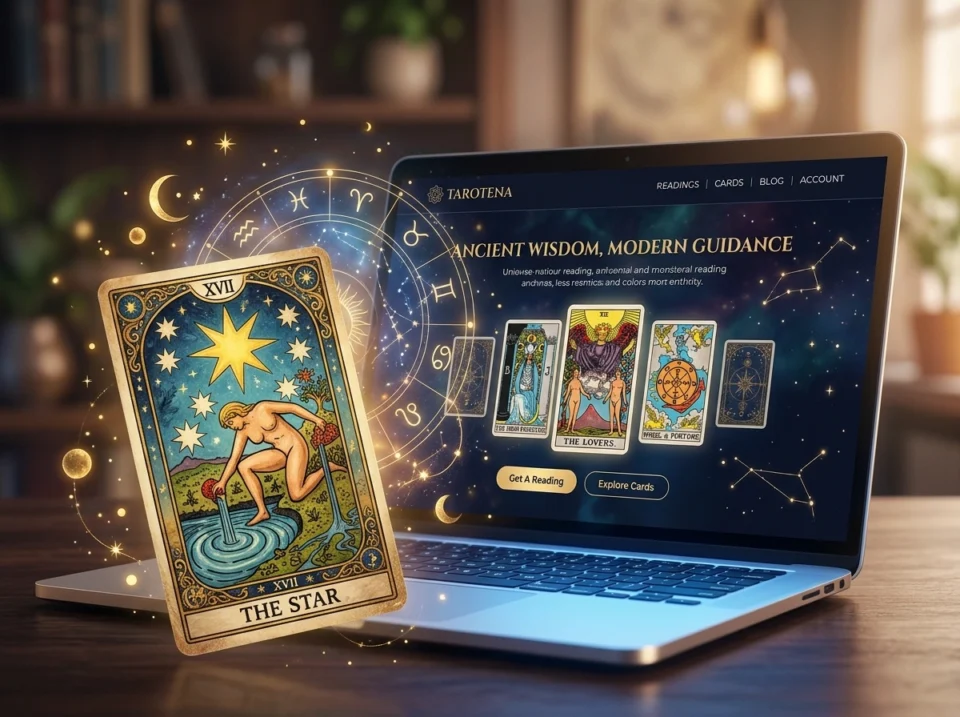
People have searched the stars and shuffled cards for centuries, looking for guidance, clarity, and a sense of meaning. What changed is how they reach those tools. A practice that once required a smoky parlor or a handwritten almanac now lives in your pocket, ready whenever you need it.
That shift raises a real question: can ancient spiritual traditions survive the move to screens without losing their soul? This article looks at how digital platforms are making tarot, astrology, and divination accessible to modern audiences, and how one platform handles that balance with care.
Here’s what you’ll learn: a quick history of tarot, the challenges of merging old wisdom with new technology, the features that make spiritual tools work online, what a good user experience feels like, and why interest in these practices keeps growing across the United States.
A Brief History of Tarot and Divination
Tarot cards first appeared in 15th-century Europe, not as mystical objects but as playing cards used in games among Italian nobility. Their reputation as tools for insight came later, around the 18th century, when readers began connecting the imagery to deeper questions about life and the self.
Astrology runs even deeper. Ancient Babylonians charted planetary movements thousands of years ago, and cultures from Egypt to China developed their own systems for reading the sky. These traditions shared a common goal: to find pattern and meaning in a confusing world.
Takeaway: Tarot and astrology are not new fads. They’re centuries-old systems people have always used to reflect, decide, and cope.
The Challenge of Bridging Ancient Wisdom with Modern Technology
Moving spiritual practice online sounds simple until you try it. The hard part isn’t the code. It’s the feeling.
A face-to-face tarot reading carries weight: the pause before a card turns, the reader’s attention, the quiet room. Translating that into a website without making it feel cold or gimmicky takes thought. Get it wrong, and you end up with a slot-machine experience that cheapens the tradition.
Designers face a few specific hurdles:
- Preserving meaning: Card symbolism and astrological detail must stay accurate, not watered down for clicks.
- Keeping it personal: Generic answers feel hollow. The experience needs to respond to the individual.
- Building trust: Users want to feel guided, not sold to.
- Respecting culture: These practices come from real traditions, and they deserve respect rather than caricature.
The platforms that succeed treat technology as a bridge, not a replacement. They use it to remove barriers, distance, cost, scheduling, while keeping the heart of the practice intact.
Takeaway: The goal isn’t to digitize tradition for its own sake. It’s to make it accessible while honoring what made it valuable.
Key Features That Make Spiritual Tools Work Online
A strong spiritual platform does more than show pretty cards. It creates an environment where reflection feels natural. Tarotena’s website is a good example of how thoughtful design turns ancient practice into something you can use today.
The features that matter most include:
- Interactive readings: Drawing cards or generating a chart should feel intentional, with clear explanations that connect symbolism to your question.
- Personalized insights: Tools that account for your birth details, mood, or specific concern feel far more meaningful than one-size-fits-all answers.
- Educational content: Good platforms teach. They explain what each card means and how astrological signs interact, so users grow more confident over time.
- Clean, calming design: Color, spacing, and pacing all shape the mood. The best sites feel like a quiet space, not a busy ad page.
- Accessibility across devices: Whether on a phone during a lunch break or a laptop at night, the experience should hold up.
Takeaway: The right features balance depth and simplicity, giving you real insight without overwhelming you.
What a Great User Experience Feels Like
Technology should disappear into the background. When a spiritual platform works well, you stop thinking about the website and start thinking about your question.
That experience usually shares a few qualities. It loads fast, so the mood isn’t broken by waiting. It guides you gently, with clear steps instead of confusing menus. And it speaks in plain, warm language rather than dense jargon.
Consider a simple scenario. Someone facing a tough career decision opens a tarot platform on a Tuesday evening. In a few minutes, they draw a spread, read clear interpretations, and walk away with a fresh angle on their choice. They didn’t need an appointment, a long drive, or a big budget. That’s the quiet power of a well-built digital tool.
Trust plays a big role too. Transparent explanations, respectful tone, and honest framing, treating readings as reflection rather than fixed prediction, help users feel safe and respected.
Takeaway: A great experience feels effortless, personal, and trustworthy from the first click.
The Growing Popularity of Spiritual Tools Online
Interest in tarot, astrology, and mindfulness has surged across the United States, especially among younger adults. Social media played a huge part, turning daily horoscopes and card pulls into shared moments and viral trends.
A few forces drive this growth:
- A search for meaning: Many people use these tools to slow down, reflect, and check in with themselves.
- Wellness culture: Spiritual practice now sits comfortably alongside meditation, journaling, and self-care routines.
- Easy access: Mobile-first design and high tech adoption rates mean anyone with a phone can explore these traditions instantly.
- Community: Online spaces let people share readings and learn together, which keeps the interest alive.
This isn’t limited to one region or group. From coast to coast, across very different communities, people are turning to digital spiritual tools for comfort and clarity. The diversity of the audience is part of the appeal, and the best platforms welcome everyone.
Takeaway: Spiritual tools are mainstream now, fueled by a real hunger for reflection and the convenience of digital access.
Conclusion
Ancient wisdom and modern technology don’t have to clash. When handled with care, they strengthen each other, the tradition brings depth, and the technology brings reach. The result is something practical: guidance that fits into a busy modern life without losing its meaning.
The platforms doing this well aren’t replacing centuries of practice. They’re protecting it, sharing it, and inviting new people to discover what generations already knew.
If you’ve been curious about tarot or astrology but never knew where to start, there’s no better time than now. Explore an intuitive, thoughtfully designed platform, pull your first card, read your chart, and see what insight you find. Visit Tarotena and let ancient wisdom meet you exactly where you are today.
