
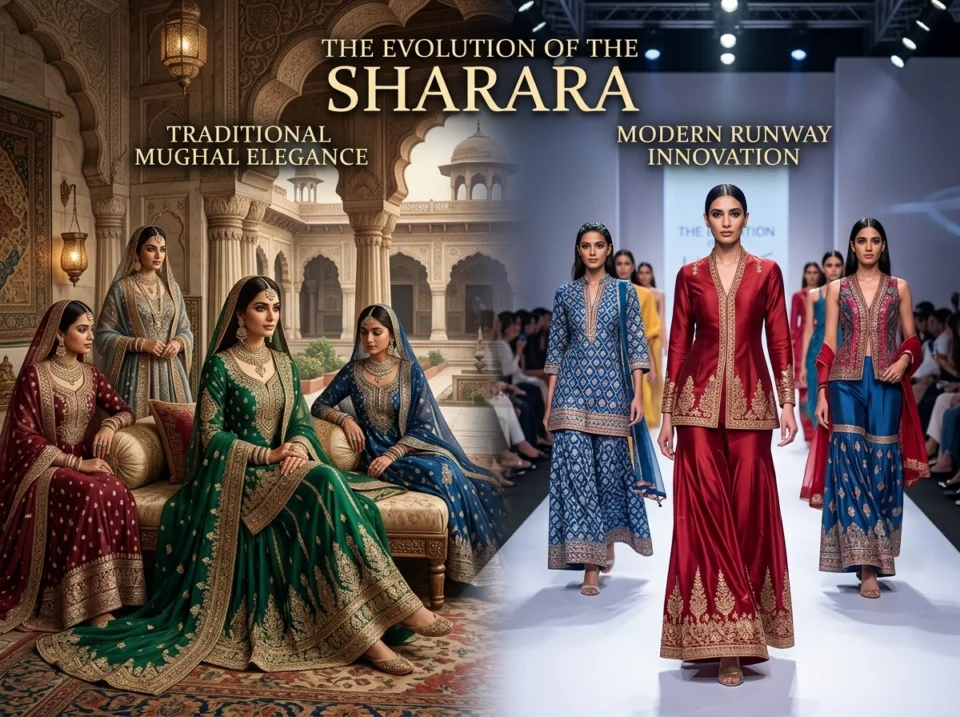
Few garments carry the kind of regal story that the sharara does. With its flowing, wide-legged silhouette and intricate detailing, this iconic outfit has traveled centuries, crossing palaces, cultures, and continents. What began as attire for royalty now graces international runways and stylish wardrobes around the world. Let’s walk through the remarkable journey of the sharara, from the opulent halls of Mughal courts to the spotlight of modern fashion.
The Royal Origins in Mughal-Era Courts
The story of the sharara begins in the grandeur of the Mughal Empire, which ruled much of the Indian subcontinent between the 16th and 19th centuries. During this golden age of art, architecture, and craftsmanship, clothing became a symbol of status, refinement, and power.
The sharara was originally worn by noblewomen and royalty in the Awadh region, particularly in and around Lucknow. It featured wide, flared trousers that flowed dramatically from the knees down, paired with a fitted top called a kurti and a flowing dupatta (scarf). The garment was often crafted from luxurious fabrics like silk, brocade, and velvet, then embellished with gold and silver threadwork known as zardozi.
These weren’t everyday clothes. Each sharara represented hours of skilled handwork by master artisans. The level of detail signaled the wearer’s wealth and social standing. In the Mughal courts, fashion was a language of its own, and the sharara spoke volumes about elegance and prestige.
Cultural Significance in South Asian Traditions
As the centuries passed, the sharara moved beyond palace walls and became woven into the fabric of South Asian culture. It transformed from royal attire into a cherished part of celebrations and special occasions across India, Pakistan, and Bangladesh.
A Symbol of Festivity and Celebration
The sharara found a special home in weddings and festive gatherings. For many families, it became the outfit of choice for brides, bridesmaids, and guests during multi-day wedding ceremonies. Its graceful movement and rich detailing made it perfect for dancing, celebrating, and creating lasting memories.
Religious and cultural festivals like Eid, Diwali, and various regional celebrations also embraced the sharara. Wearing one became a way to honor tradition while looking effortlessly elegant.
Passing Down Through Generations
In many households, sharara sets were treated as heirlooms. Mothers passed them down to daughters, carrying stories and sentimental value through the years. This generational connection deepened the garment’s cultural meaning, making it more than just clothing. It became a thread linking the past to the present.
Decline and Revival Through the 20th Century
Like many traditional garments, the sharara experienced ups and downs as fashion trends shifted throughout the 20th century.
A Period of Fading Popularity
During the mid-1900s, Western fashion influences swept across South Asia. As lifestyles changed and modern clothing gained popularity, elaborate traditional outfits like the sharara started to feel less practical for daily life. Simpler styles such as the salwar kameez took center stage, and the sharara slipped quietly into the background, reserved mostly for rare formal events.
The Comeback
Fashion, however, has a way of cycling back. By the late 20th century, a renewed appreciation for cultural heritage began to grow. Designers and film industries played a major role in this revival. Bollywood, in particular, helped reintroduce the sharara to younger generations. When beloved actresses appeared on screen wearing stunning sharara sets, audiences fell in love all over again.
This nostalgia, combined with a growing pride in traditional craftsmanship, breathed new life into the garment. The sharara was no longer a relic of the past. It was ready for a stylish second act.
Modern Transformation and the Global Runway
The 21st century has been kind to the sharara. Today, it stands as a celebrated piece in both traditional and contemporary fashion circles, capturing attention well beyond South Asia.
Reinvented by Modern Designers
Talented designers have reimagined the classic silhouette in fresh, exciting ways. They’ve experimented with lighter fabrics, bold color combinations, and minimalist embroidery to appeal to modern tastes. Some versions feature crop tops, off-shoulder cuts, or sleek, tailored finishes that blend old-world charm with current trends.
This creative evolution has made the sharara incredibly versatile. Whether someone wants a heavily embellished bridal look or a chic, understated style for a dinner party, there’s a version to match. You can explore a stunning range of designs and styling inspiration for the modern sharara dress that beautifully balances tradition with trend.
Stepping onto Global Runways
What truly marks the sharara’s evolution is its appearance on international stages. Fashion shows in cities across the world have featured this garment, introducing it to diverse, global audiences. As interest in cultural fashion grows in the United States and beyond, the sharara has become a favorite among those who appreciate unique, statement-making attire.
South Asian communities living abroad have also helped keep the trend alive. From coast to coast, the sharara appears at weddings, cultural festivals, and red-carpet events, proudly representing heritage while fitting right into the modern fashion landscape.
Contemporary Styling Tips and Occasions
One of the best things about the sharara today is how easily you can style it for nearly any event. Here are some practical tips to help you make the most of this timeless piece.
Choosing the Right Sharara for the Occasion
- Weddings and formal events: Opt for richly embroidered sets in jewel tones like deep red, emerald, or royal blue. Heavy zardozi work and luxe fabrics create a show-stopping look.
- Festive gatherings: Choose vibrant colors with moderate embellishment. These strike a balance between celebratory and comfortable.
- Casual or daytime events: Lighter fabrics, pastel shades, and minimal embroidery offer an elegant yet relaxed vibe.
Accessorizing With Confidence
The right accessories can elevate any sharara look. Consider these pairings:
- Jewelry: Statement earrings or a bold necklace complement the outfit beautifully. For heavily embroidered sets, keep jewelry simpler to avoid an overwhelming effect.
- Footwear: Embellished juttis or heeled sandals work wonderfully and add a polished finish.
- Hairstyles: A sleek bun or soft waves both pair nicely, depending on the formality of the event.
Mixing Tradition With Modern Flair
Don’t be afraid to experiment. Pairing a traditional sharara bottom with a contemporary top, or adding a trendy belt, can create a fresh, personalized look. Many people today love blending classic and modern elements to express their own unique style.
A Timeless Garment With a Bright Future
The sharara’s journey from the Mughal courts to today’s runways is a beautiful reminder of how fashion connects us to our roots while embracing change. This garment has weathered shifting trends, cultural transformations, and the passage of time, yet it remains as captivating as ever.
Whether you’re drawn to its royal history, its cultural depth, or simply its stunning beauty, the sharara offers something special. As designers continue to reinvent it and global audiences welcome it with open arms, one thing is clear: the sharara isn’t just surviving. It’s thriving, and its story is far from over.
