
Search engine optimization requires constant adaptation. As algorithms grow more sophisticated, older tactics lose their effectiveness, forcing marketers to find more reliable ways to build domain authority. One strategy that continues to deliver consistent, measurable results is the acquisition of curated backlinks.
Also known as niche edits, curated backlinks involve placing your target URL into existing, aged content on established websites. Because search engines have already indexed and evaluated these pages, the link equity begins flowing to your site almost immediately. This allows you to bypass the lengthy sandbox period typically associated with publishing brand-new guest posts.
However, executing this strategy requires a high level of precision. Placing links indiscriminately can do more harm than good. This guide outlines the essential guidelines for acquiring high-quality link placements that will sustainably accelerate your search rankings.
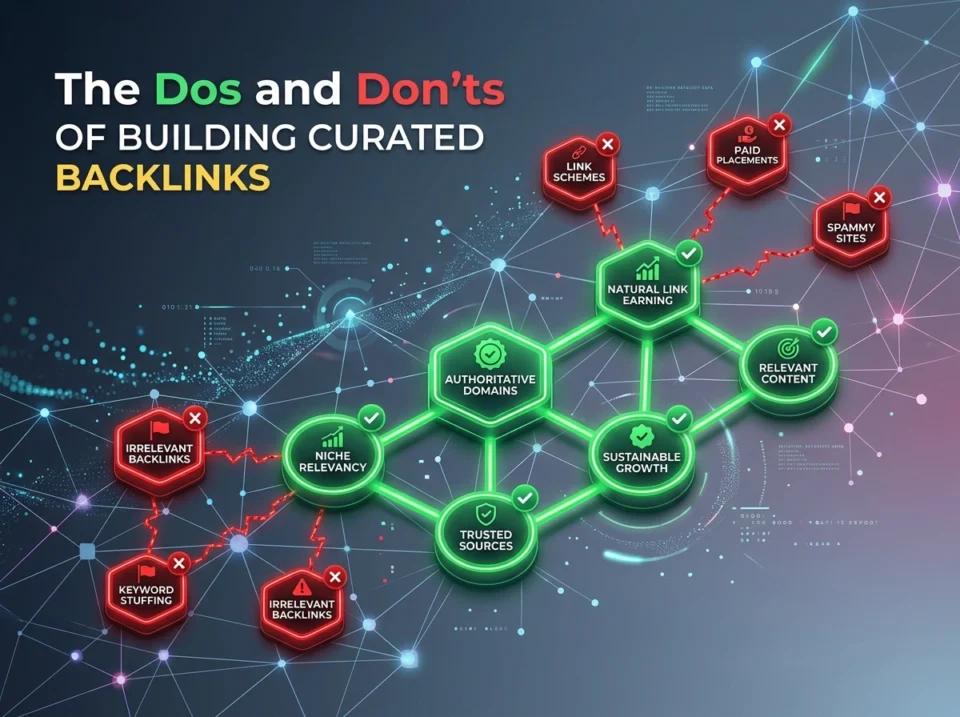
The Dos of Building Curated Backlinks
Implementing a successful niche edit campaign means focusing heavily on quality control and relevance. Following these core principles will ensure your backlink profile remains healthy and robust.
Do Prioritize Contextual Relevance
Search engines use surrounding text to understand the context and value of a link. When securing a placement, the host article must be topically related to your own content. If you run a financial software company, acquiring a link inside a deeply researched article about accounting automation signals strong authority to search engines.
Do Vet Domains Rigorously
Not all websites offer the same value. You must implement a strict quality check to ensure you only acquire links from penalty-free sites. Look for domains with real, verified organic traffic—ideally exceeding 5,000 monthly visitors. Furthermore, aim for sites with a Domain Authority (DA) of 40 or higher. Curated backlinks placed on verified, high-traffic domains offer the greatest return on investment and protect your site from algorithmic penalties.
Do Map Anchor Text Strategically
Anchor text should flow naturally within the existing paragraph. Review your overall backlink profile to determine which anchor text ratios look the most organic. Mix exact-match anchors, partial-match phrases, and branded terms to support your primary commercial pages without raising red flags.
The Don’ts of Building Curated Backlinks
Understanding what to avoid is just as critical as knowing what to execute. Poor link-building practices can lead to severe ranking drops and manual penalties.
Don’t Rely on Link Farms or PBNs
Private Blog Networks (PBNs) and link farms exist solely to manipulate search rankings. Google’s algorithms are highly adept at identifying and penalizing these networks. Always verify that the prospective website is a legitimate business or publication with real readers, genuine editorial standards, and an active social presence.
Don’t Ignore Declining Traffic Trends
A website might boast a high Domain Authority, but its actual organic traffic could be in freefall. A steady decline in traffic often indicates an algorithmic penalty or a lack of content maintenance. Before requesting a link placement, review the site’s traffic history over the past year. Only partner with webmasters whose traffic is stable or growing.
Don’t Force Irrelevant Placements
A high-authority website is useless if the specific article has nothing to do with your industry. Shoehorning a link about enterprise cybersecurity into a blog post about home gardening will confuse search engine crawlers and provide zero value to the reader. If the editorial placement requires awkward phrasing to make sense, move on to a better prospect.
Best Practices for Professional Implementation
Transitioning from theory to execution requires a structured, white-hat outreach process. By standardizing your approach, you can scale your link-building operations effectively.
Conduct a Strategic Foundation Audit
Never build links blindly. Begin by analyzing your entire backlink profile to identify exact link gaps. Conduct a competitor analysis to see where your industry rivals are securing their placements. This foundational research allows you to prioritize your target URLs and determine exactly which pages need the most support.
Utilize Precision Prospecting Tools
Manual outreach is a numbers game, but the quality of your prospects determines your success rate. Use proprietary scraping tools to find aged articles that meet your strict traffic and DA metrics. Filter out low-quality sites immediately so your outreach team can focus entirely on negotiating with legitimate webmasters.
Maintain Live Reporting
Keep track of every placement as it goes live. Maintaining a comprehensive dashboard of exact URLs and anchor text helps you monitor the health of your campaign. If a link is removed or a host site experiences a sudden drop in quality, you need to know immediately so you can adjust your strategy.
Achieve Sustainable Search Rankings
Building a formidable search presence requires patience, strategy, and an unwavering commitment to quality. By focusing on aged, topically relevant articles on authoritative domains, you can secure link equity that drives immediate and lasting results. Avoid the shortcuts of link farms and irrelevant placements, and instead invest your resources into precise, editorial-driven outreach.
Start evaluating your current backlink profile today. Identify your most critical content gaps, establish your baseline metrics for acceptable domains, and begin reaching out to industry publishers. A disciplined approach to niche edits will inevitably lead to higher rankings, increased organic traffic, and stronger domain authority.
