
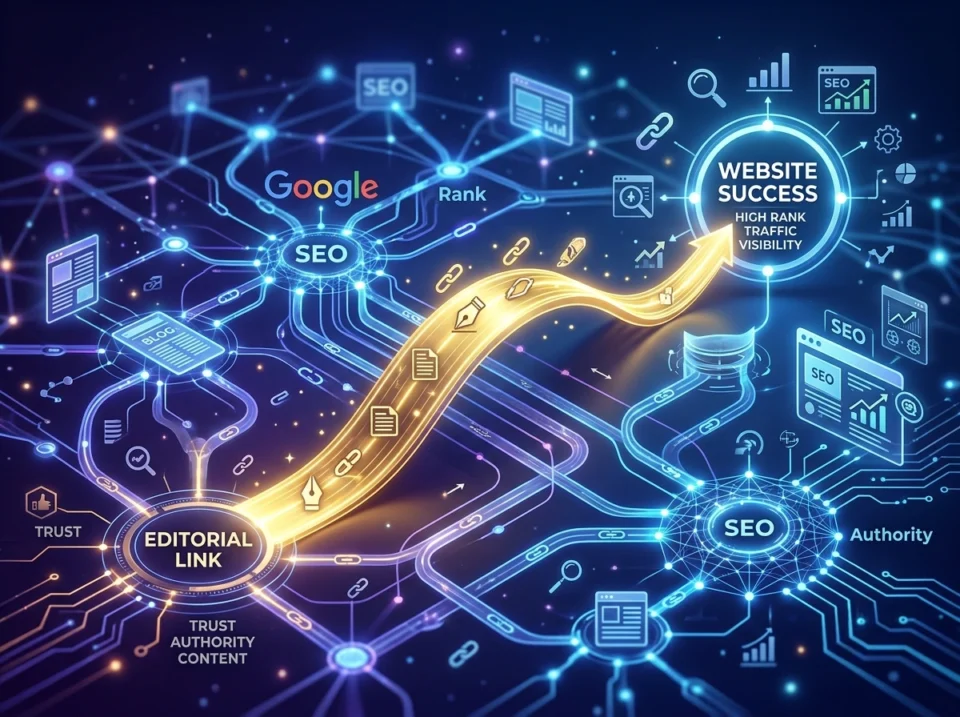
Search engine optimization relies heavily on trust. Search engines need to know that your website is credible, authoritative, and worthy of being shown to thousands of searchers. While there are many ways to signal this trust, few methods are as effective as securing high-quality backlinks. They act as digital votes of confidence, telling algorithms that other webmasters find your content valuable.
However, not all votes are weighed equally. The source, context, and acquisition method of a backlink dictate its value. This is where the divide between standard link building and premium digital PR becomes apparent.
Understanding the hierarchy of backlinks is essential for any business looking to improve its organic visibility. If you spend resources acquiring low-quality links, you risk stalling your growth or facing search engine penalties. By focusing your efforts on the highest tier of link building, you can establish an unshakable foundation for your website.
The Core Mechanics of Link Building
Link building is the process of acquiring hyperlinks from other websites to your own. A hyperlink is a way for users to navigate between pages on the internet. Search engines use these links to crawl the web, discovering new pages and determining how well a page should rank in their results.
When an external website links to your page, it passes along “link equity.” This equity is essentially a measure of authority. A link from a highly respected, globally recognized news outlet will pass significantly more equity than a link from a newly created, unverified blog.
Over the years, the mechanics of link building have evolved. Early search engine algorithms were easily manipulated by bulk link spam. Webmasters could create thousands of fake profiles and forum signatures to artificially inflate their rankings. Search engines have since become incredibly sophisticated. They now analyze the context surrounding the link, the relevance of the linking site to your niche, and the natural integration of the link within the text.
Defining the Gold Standard
An editorial link is a link that results from a webmaster or journalist actively choosing to reference your website because they find your content genuinely useful, informative, or relevant to their audience. These links are embedded naturally within the body of an article or blog post, completely surrounded by contextual text.
Unlike links that you can easily generate yourself—such as social media profiles or directory submissions—editorial placements must be earned. They are granted by gatekeepers (editors, journalists, and site owners) who maintain strict publishing standards.
When you secure editorial links, you are gaining a placement that Google and other search engines view as the ultimate signal of authority. Because these links require effort, high-quality content, and relationship building to acquire, they are inherently scarce. This scarcity is exactly what makes them so valuable.
Editorial Links vs. Other Backlink Types: A Direct Comparison
To truly appreciate the value of an editorial placement, you must understand how it compares to other common types of backlinks. The SEO industry is filled with various tactics, some of which carry significant risk.
Forum and Profile Links
Forum and profile links are self-created. Anyone can register for an account on a community forum or social platform and drop a link to their website. Because there is no editorial barrier to entry, search engines assign very little weight to these links. While they might drive a small amount of referral traffic if placed in a highly relevant discussion, they will not move the needle for your organic search rankings.
Standard Guest Post Links
Guest posting involves writing an article specifically to be published on another person’s blog, usually with a link back to your site included in the author bio or the body text. While guest posting can be a valid strategy, it has been heavily commoditized. Many websites exist solely to sell guest post placements, publishing low-quality content with no real audience. Search engines are highly adept at identifying these “guest post farms” and often devalue the links originating from them.
Private Blog Networks (PBNs)
A Private Blog Network is a collection of websites built specifically to manipulate search engine rankings by providing backlinks to a single primary website. This is a direct violation of Google’s Webmaster Guidelines. While PBNs can sometimes provide short-term gains, they carry a massive amount of risk. When search engines uncover a PBN, they typically penalize the entire network and any site benefiting from it.
Press Release Syndication
Press releases are distributed through massive syndication networks. While this results in hundreds of links pointing to your site, these links are almost always “nofollow” (meaning they pass no link equity) and duplicate content. They are useful for brand awareness and announcements but offer minimal long-term SEO value compared to an exclusive, contextually relevant editorial placement.
Why Editorial Links Are Superior for SEO
The superiority of editorial placements comes down to quality signals. Search algorithms are designed to mimic human judgment. A human reader trusts a recommendation that flows naturally within a well-researched article far more than a random link dropped in a comment section.
First, editorial placements offer unmatched contextual relevance. If you run a financial technology company and secure a link within a Forbes article discussing the future of digital banking, the context is perfect. Search engines read the text surrounding your link, associating your brand with those highly relevant industry terms.
Second, these placements occur on websites with real, verified organic traffic. A link on a site that receives millions of monthly visitors is infinitely more powerful than a link on a dormant blog. Furthermore, this real traffic can actually click through your link, providing you with qualified referral visitors who are already interested in your industry.
Finally, editorial placements are safe. Because they adhere strictly to search engine guidelines, they carry zero risk of algorithmic penalties. They are permanent assets that provide compounding SEO value month after month, year after year.
The Impact on Domain Authority and Trust
Domain Authority (DA) and Domain Rating (DR) are metrics created by third-party SEO software companies to estimate how well a website will rank. While these are not official Google metrics, they serve as excellent proxies for a website’s overall trust and link profile strength.
Securing premium editorial placements from publications with strong DR (typically 40 to 70+) has a profound impact on your own site’s metrics. A single link from a highly authoritative media outlet can pass more trust to your domain than hundreds of low-tier links combined.
This injection of trust allows your entire website to rank more easily for highly competitive, lucrative commercial keywords. When your domain is viewed as an authority, every piece of content you publish benefits. Your new blog posts index faster, your product pages rank higher, and your brand perception elevates instantly. Competitors with weaker link profiles simply cannot match the visibility of a site backed by top-tier editorial citations.
How to Acquire High-Quality Editorial Links
Earning these placements requires a strategic, systematic approach. It is not as simple as sending a few cold emails. The process involves multiple steps, starting with a comprehensive audit of your current backlink profile, target keywords, and competitive landscape.
The foundation of acquiring these links is creating linkable assets. This means producing premium, data-driven content that journalists and editors actually want to reference. Original research, comprehensive industry reports, and unique data visualizations are highly effective tools for digital PR.
Once you have a linkable asset, the outreach phase begins. This involves manually pitching your content to relevant editors, writers, and site owners. You must communicate the value of your asset and why it enhances their specific article. This requires relationship building, persistence, and a deep understanding of what different publications are looking for.
Many businesses choose to partner with experienced digital PR and SEO agencies to manage this process. Professionals possess the established relationships, the content creation resources, and the strategic knowledge required to secure high-tier placements consistently and at scale.
Elevate Your Search Visibility
Building a successful organic presence requires a commitment to quality over quantity. The internet is saturated with low-level content and spammy link building tactics that offer no sustainable value. By focusing your resources on acquiring premium editorial placements, you separate your brand from the noise.
These links provide the contextual relevance, authoritative trust, and qualified referral traffic necessary to dominate search engine results. While they require more effort and strategic planning to secure, the measurable increases in keyword rankings, traffic, and revenue make them the most powerful asset in your SEO arsenal. Take the time to audit your link building strategy and prioritize the placements that will truly move the needle for your business.
